|
Destiny |
|
NORSEMEN & TANCARVILLE ON THE SEINE RIVER
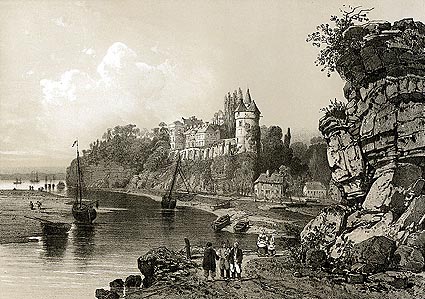
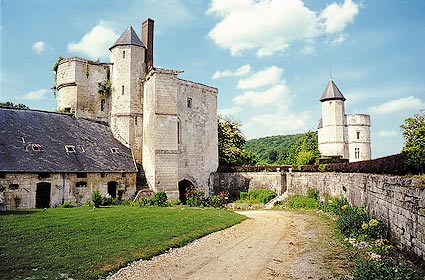
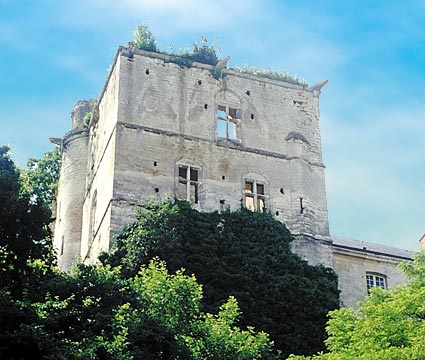
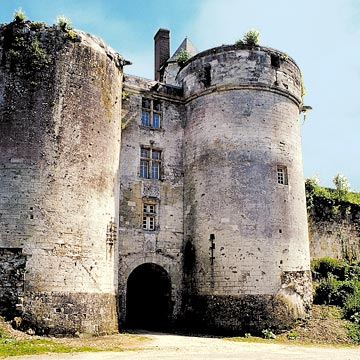
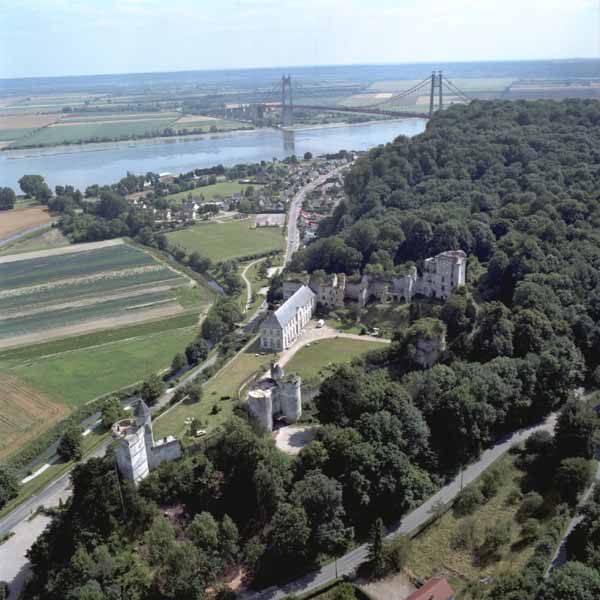
NORSEMEN AND THE NAME CHAMBERLAIN Over a thousand years ago, in the ninth and tenth century many ships crewed by Norsemen or Northmen, raided the shores of England and France from “Northmanna land” (Norway) and “Scania” (Scandinavia). These Sea-Kings from the North were usually kinsmen of the northern “land sovereigns”. They were a race of beings however, without a square metre of territorial property, without towns or visible nation, with no wealth or dominion but their ships, no force but their crews, and no hope but their swords, who swarmed down the western coastlands of Europe and into the Mediterranean every summer raiding and plundering in every district they could approach. One of the most prominent of these Norse sea-kings was a Danish Viking, Ganger Hrolf (860-927), whose name was Latinised to 'Rollo'. Rollo was born at Fakse (Faxe) on the island of Sjaelland, some 50 kilometres south-west of Copenhagen, Denmark where today the ‘Rollo Stone' at Faxe commemorates his fame. Rollo and his followers seized, or extorted from the Frankish kingdom, the coastal area of northern France and named it “Northmandi/Nordmandi” (Normandy). Their possession of the land was formalized by the Treaty of St. Clair-sur-Epte between the Frankish king Charles III of France and Rollo in the year 911. In truth, Rollo and his crew were being used by the Franks as a buffer against other marauding ships appearing on their beaches. Through his family connections in Dan’s Mark (Denmark), Rollo took the title of Duke of Normandy. A thousand years later in June 1944 these same Normandy beaches became the location for the ‘D-Day’ invasion and landings by allied troops fighting in World War Two to bring Hitler’s Nazi plans for Europe to an end. A foremost Norseman under Rollo was Tancred who was with Rollo at St. Clair-sur-Epte, in 911, and began building a fortified castle, on the first promontory guarding the mouth of the Seine River. (Picture above). Château de Tancarville was extended in the 11th century by his son Rabel or Raoul, the chamberlain of Dukes of Normandy. In the 12th century the square tower was built with 1.65m thick walls. In 1418 at the time of the conquest of Normandy by Henry V of England, the title of Earl of Tancarville was given to John Grey. After the Hundred Years War the Harcourt family restored the castle. The ballroom was built in 1468. In 1709 the castle was partially rebuilt by the Count of Evreux. After 1789, the castle was plundered and partly burned. In the 1960s, the castle served as a summer camp for children. Today, visitors to Tancarville may see the Castle ruins including the Eagle Tower atop the hill, and the Church of St. Jean d'Abitot at the foot of the hill. 'Abitot' is Scandinavian - the ending 'tot' is old Norse for hill. Variations of the spelling include Abbetot, Abetoth (Domesday book) and Dabitot. Depending on who is recording the information, Tancred's son was either Raoul or Rabel. 'Rabel's Isle' in the Seine and 'Rabel's Foss', a moat around the Castle, are named for him. Rabel's son was Geraldus of Tancarville, who married Helendis. Geraldus and Helendis had two sons –Raoul or Rabel II of Tancarville and Almericus d'Abitot. Raoul II became Chamberlain to Robert the Devil, or Robert the Magnificent, no doubt depending on your interpretation of history, who was Duke of Normandy from 1010 to 1035. Duke Robert, a fourth-generation descendant of Rollo, was illegitimate father to William the Conqueror (1028-1087), who as a child was placed in Rabel II's care to raise and mentor. Raoul continued to oversee William’s domestic affairs throughout his conquest of England in 1066. In the same way that Rob the Baker became Rob Baker, or Rob the Farmer became Rob Farmer, the English descendants of Raoul or Rabel II the Chamberlain, have used the surname ‘Chamberlain’ to this day.
A recent aerial view of Tancarville Castle and suspension bridge built in the 1950’s crossing the Seine River.
- Chamberlain -
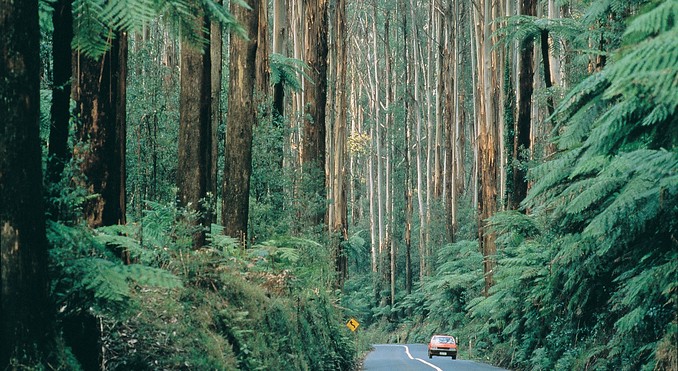
Today the Chamberlain family are spread far and wide across the globe and I find myself living today in the twenty-first century, on a Ferny Creek hillside of the Dandenong ranges looking out across Port Philip Bay where cruise ships bring their countless tourists to ‘raid and plunder’—in the nicest possible way—the city of Melbourne and swarm across the Victorian country side.
FERNY CREEK IN THE DANDENONG RANGES
Ferny Creek, an outer suburb in eastern Melbourne, Victoria, Australia, is 33 km from Melbourne's CBD. It is part of the Local Government Shire of Yarra Ranges, and until the tourists and visitors arrive has a population something less than 2000. The suburb is built around but mainly to the south of Dunns Hill (height 561m) with most of Ferny Creek lying between 400 and 550 metres above sea level. It is named for the stream running through it, Ferny Creek. The suburb is largely surrounded by conservation zones and national parks, with the Dandenong Ranges national park on its northern and west sides, the Upwey habitat corridor to the south and Sherbrooke Forest to the east. From early in its European history the area was used by Melburnians as a place to get away from the maddening crowd. People came for weekend and summer camps and to gain some relief from the oppressive heat. As a result, gradually over the years, simple "weekender" cottages developed. As the city grew, all of the original forest was felled to build the many timber-framed, weatherboard clad structures that still make up much of Melbourne's suburbia. All of the forest now to be seen is "regrowth" that has happened since that early denuding process. Today the area still attracts many visitors and tourists who come to enjoy, amongst other things, the beautiful scenic drives and many walking tracks that are an integral part of the local parks. One well known and very popular track quite close to Ferny Creek is called "The Thousand Steps". This particular track has also become a local memorial to Papua New Guinea's infamous "Kokoda Track", and the bloody battles fought there by Australians during WWII.
Living in Ferny Creek, I am a fifth generation part of a pioneering family of six who left their home in Preston Capes, Northamptonshire and sailed from Gravesend, England with 297 other immigrants on Sunday 2nd January 1842. Enduring four months of very cramped conditions, aboard the "London", and losing Edwin to bronchitis, they were like so many other families, who lost the youngest members of their families to the cruel conditions of that early migration (And when considering the plight of boat people migrating to our shores in the twenty-first century, one is forced to ask, "What has changed?"). On their arrival at Port Nicholson, an early name for Wellington, New Zealand, they were quite literally dumped on the beach, and left to fend for themselves as they started a complete new life. The New Zealand Company was very good at promoting the scheme under which so many migrants came, but was very poor in the support they provided once these travellers had arrived. This site is dedicated to the pioneering members of my family, in all of their many branches. Their strength of character, fortitude and their vision has left a magnificent legacy, a foundation on which we in subsequent generations can only hope to continue the building process, and thereby pass the baton on to future generations. Today this family number in their thousands across New Zealand and beyond. This is why I have used the word "Destiny" as the title for this website. To get started, follow this link to the - Foreword & Table of Contents enjoy - Ian NOTE: 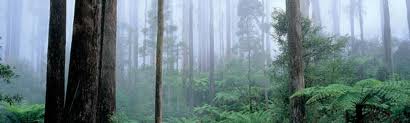
|

|
|
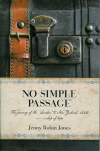
| The Journey of the "London" and her passengers
from England to New Zealand in 1842. Thomas & Susannah Chamberlain, together with their four
children sailed aboard the London on this voyage to Port Nicholson. The author is Jenny Robin Jones
a descendant of one of the passengers. The book was published in 2011 by Random House ISBN 978 1
86979 510 8 |
|
|
|
|
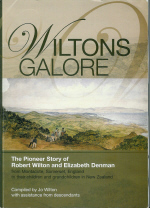
The Pioneer Story of Robert Wilton and Elizabeth Denman from Montacute,
Somerset, England and continued through their children and grand-children in New Zealand.
Mary Wilton married Arthur Joseph Chamberlain, and this is the story & record of her
family. |
|
|
|
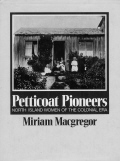
Stories of New Zealand's North Island women of the colonial pioneering
era compiled and recorded for us by author Miriam Macgregor. Two of the women featured in
this book are Susannah Catherine (Bull) Chamberlain and her daughter -in-law (Catherine
McKenzie) Kitty Chamberlain. |
|
|
|
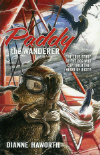
The true story of an Airedale dog who captured the heart of the city of
Wellington during the dark days of depression. Also captured here is Paddy's association with
Blue Taxicab manager, Merlin Chamberlain. The author is Dianne Haworth, a dog-lover and
editor of Animal's Voice, who lives and works in Auckland. |
On the Trail
of
Parker & Walker
Families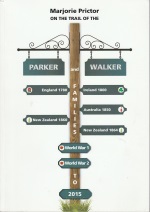
This 2015 self-published family history has been put together by Marjorie Prictor on the trail of Parker and the Walker families who came to New Zealand in the 1860s. Marjorie is a descendant still living in the Northland district of Port Albert where each of these families settled.
Douglas Family
Reunion
1843-1981
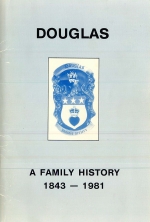
A family history of the Douglas Family in Australia, compiled in 1981 for a family
reunion by sisters Grace Douglas & Rosalie Vanstan of Bendigo, Victoria.
Downloadable as file-093 from the Supplements Page.
|