MONTACUTE, SOMERSET
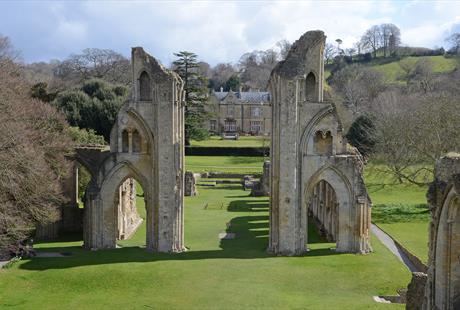
Legends abound in the county of Somerset dating back 2000 years and
beyond. Several significant legends emerge from the ruins of Glastonbury Abbey situated on what was once
theisland of Avalon. Close by is another island known as Inis Wytren, or Glass Island
where excavations have revealed a once busy site of the glass making industry for which ancient Britons were
famous so that Saxons later named it Glastonbury. Centuries devoted to draining the land have turned what were
numerous islands into a dry plain and pushed the sea back several miles.
As early as 36CE Joseph of Arimathea is
said to have brought the story of Christ’s Resurrection to Britain with him as well as the chalice used by Jesus
and the Disciples during the Last Supper. It was this goblet that gave rise to the ‘Quest for the Holy Grail’
legends of King Arthur, whose discovered remains lie buried at Glastonbury. Another legend relates to Joseph’s
staff which grew when planted on Wearyall Hill, and flowered twice a year at Christmas and Easter. Reputedly,
Joseph established here the very first church outside Jerusalem.
Joseph of Arimathea is said to have been
present when his niece Mary, the mother of Jesus, died in 48 CE. and was buried at Glastonbury Abbey.
According to Cressy, a Benedictine Monk
and historian, St. Joseph of Arimathea died and was buried ‘over Mary’ at Glastonbury Abbey on 27 July, 82 CE.
Inscribed upon Joseph’s sarcophagus were the words ‘Ad Brittanos veni post Christum Sepelivi Doci Quieri’
or “To the Britons I came after I buried the Christ. I taught, and I have entered my rest.” Besides Joseph and
his niece Mary, and contrary to Romanised history, a number of the Apostles, ended their days in Britain and
were buried at Glastonbury in Somerset. The remains of others were transported to Britain after their death.
Converts to Christianity flooded to
Glastonbury Abbey for baptism, instruction, and missionary assignment. Isadore, Archbishop of Seville
[600–636CE] wrote in his ‘Historia’ that Philip from Bethsaida together with his daughters preached
Christ to the Gauls. At one point, Philip sent 160 disciples from Gaul to assist Joseph of Arimathea and his
team at Glastonbury. One of the first outreaches from Glastonbury was undertaken by the Bethany group including
Mary, Martha, their maid Marcellus and brother Lazarus. This family headed back across the channel to France
where Lazarus evangelized in the region of Marseilles for seven years. They lived out the rest of their lives
preaching and teaching in southern France. From this point, Glastonbury became the centre of Christian outreach
world-wide. For centuries, Gallic records indicate the Archbishops of Treves and Rheims were all Britons
supplied by the mother church of Glastonbury, Avalon in Somerset, Britain.
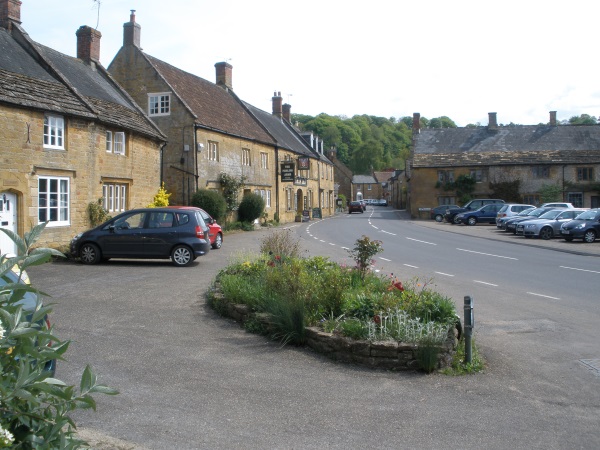
Turning to Montacute
just a few miles away, local historian Tim Lambert writes, the Somerset village of
Montacute gets its name from the Latin words Mons Acutis, which simply
means “pointed hill”. (In the Middle Ages all educated people spoke Latin and the names of places and landmarks
were often Latinised in documents in the same way that plants to this day carry a Latin botanical
name).
In the 11th century, according
to an old legend Tostig, a lieutenant of
King Canute found a miracle
working cross at the site. The Normans built a motte and bailey castle on the hill. A motte and bailey castle
consisted of a wooden stockade around a hill with living quarters on the top. Later the land was given to the
French abbey at Cluny. The French monks founded a priory (a daughter abbey) at Montacute in 1102. It was called the
Priory of St Peter and St Paul and in the Middle Ages dominated the area.
In the Middle Ages the
settlement at Montacute by royal decree, became a market town, allowing the people of Montacute to hold weekly
markets. (In those days there were few if any shops and if you wished to buy or sell anything you waited for market
day, grew your own, or bartered directly with a farmer or grower). Like many Somerset towns Montacute became a
centre of the wool trade. By standards of the 21st century it was a small village with a population of only a few
hundred. Montacute grew large enough that in 1240 a new borough (or suburb) was added to the town.
In 1539 Henry VIII closed the
priory and most of its buildings were demolished and the stonework, at least, used in other construction projects.
However, a fishpond remains and also a dovecote, where both fish and doves were farmed as food
sources.
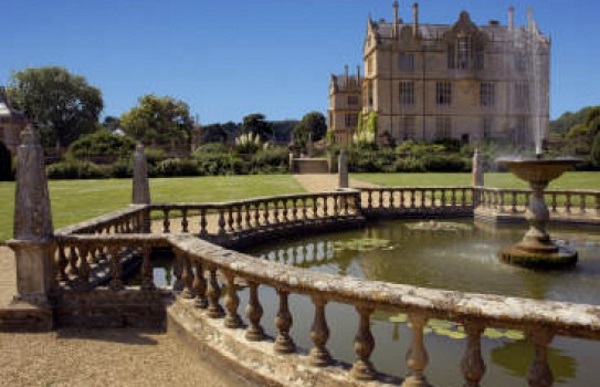
It was from here that the family
of Robert and Elizabeth (Denman) WILTON migrated from Plymouth aboard the Oriental on the 22 June 1841 and arrived at Port Nicholson 26 October. They were
going to sail on up the west coast past Mount Egmont to New Plymouth but because of Elizabeth’s ill-health the
surgeon recommended they disembark in Wellington.
![Robert Wilton [1796-1869]](images/R.Wilton%201796-1869.jpg "Robert Wilton [1796-1869]") 
Robert Wilton [1796-1869]
The Story of Robert & Elizabeth's Family
|