MASTERTON, WAIRARAPA
Wairarapa’s largest town, 105km
north-west of Wellington. Each year the town hosts the international shearing competition, the Golden Shears.
Masterton was founded in 1854 by the Small Farms Association. The association was led by Joseph Masters—after
whom the town was named—and aimed to settle working people in villages and on the land. The Chamberlain Family
moved from Wellington to settle here prior to 1858. At first Masterton grew slowly, but as its farming
hinterland became more productive it began to prosper. In the 1870s it overtook Greytown as Wairarapa’s major
town. It was reached by the railway line from Wellington in 1880. This cemented the town’s position as the
region’s main market and distribution centre.
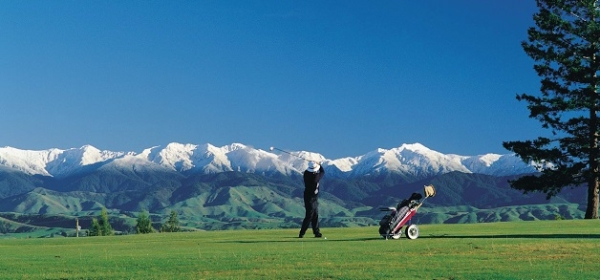
Situated
on the Waipoua river, sixty-seven miles north-east from Wellington, Masterton is the chief town of the
Wairarapa, and is in the county of Masterton. The surrounding country is level and undulating, and well suited
for grazing, dairying, and mixed farming purposes. Masterton has two daily newspapers, a post and telegraph and
money order office, four branch banks, two clubs, a museum, a district high school, a technical school, a large
number of fine business premises, gasworks, several good hotels, and a number of handsome private residences.
The churches are represented by the Anglican, Presbyterian, Roman Catholic, and Wesleyan denominations, besides
a strong detachment of the Salvation Army. The industries of the town include a fellmongery, creamery, flour
mills, saw — mills, cordial factories, sash and door factories, cement and pipe factory, engineering works, and
coach and carriage factories. Grape growing and wine making is a growing industry, and there is also a large bee
farm at Kuripuni. The town is well laid out, the streets are wide, and the centre of the town is a rectangle.
Queen street, which is the principal business thoroughfare, has some fine shops, hotels, and other buildings,
which present a good appearance. The recreation ground, or public park, occupies a reserve of about twenty-eight
acres. The grounds are well laid out, prettily planted, and comprise a fine artificial lake. A few acres of the
recreation reserve are cut off for the cemetery, in which there are many handsome monuments bearing the names of
early settlers, prominent among them being that of Mr. Joseph Masters, described as “one of the founders of
Masterton, after whom the town was named.” There is an important public body in Masterton, known as the Town
Lands Trust, which was established by the early settlers for the advancement of education and other public
affairs. The town possesses a hospital, acknowledged to be one of the most complete and best managed country
hospitals in the Dominion. Adjacent to the town are the fish ponds and hatcheries of the Wellington
Acclimatisation Society, and from these hatcheries trout are distributed throughout New Zealand and to the
Australian States. Visitors are admitted to inspect these ponds and hatcheries every day, except Sunday, from 1
to 5 p.m. There is splendid trout fishing in the Waipoua, Ruamahanga, and Waingawa rivers, which are close to
the town. The roads around and throughout the whole of the Wairarapa are excellent for cycling. Coaches run
north-east to Taueru, Carswells, Tenui, Whakataki, Castle Point, Blairlogie station, Kohiwai, Riversdale,
Waikaratei, and Homewood; and south to Carterton and Greytown. There is an Agricultural and Pastoral Association in Masterton, the show of which is held in October.


(People you meet on the way to Masterton)
|